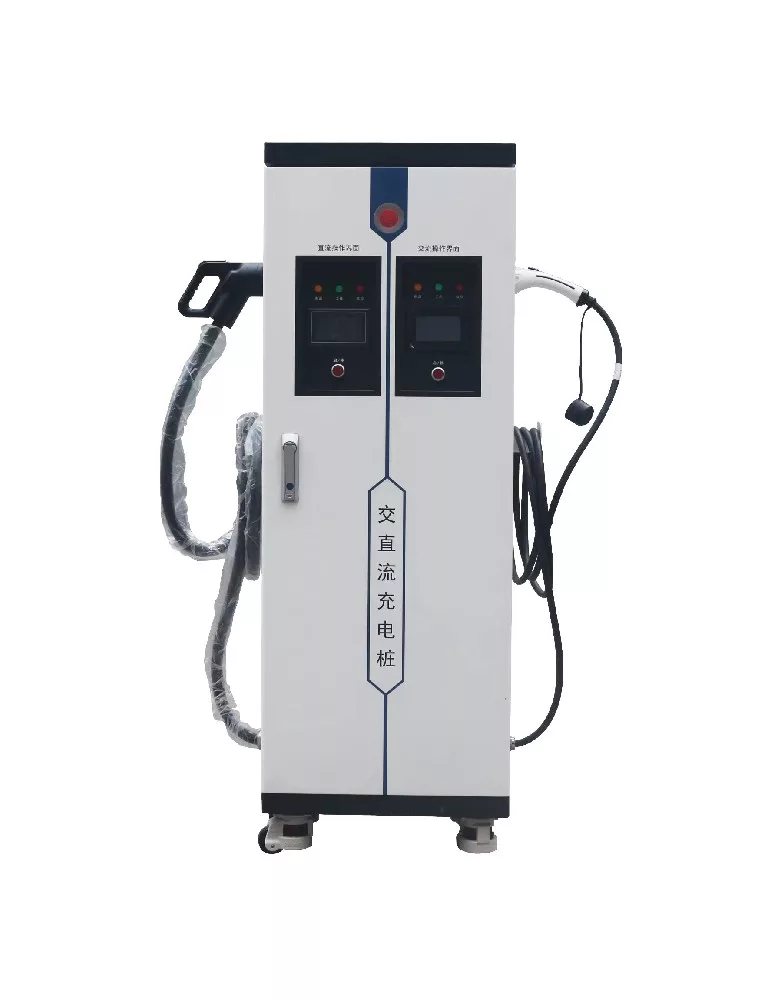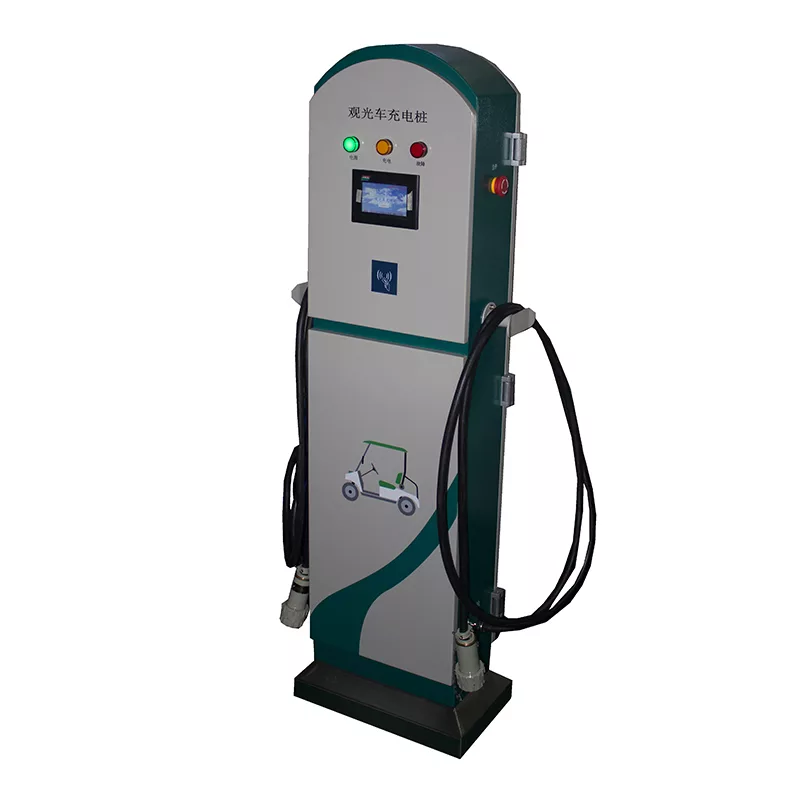
EV Charging Pile / Rack-Mount EV Charging Pile / Laboratory EV Charging Pile from Jinan Nenghua Electromechanical Equipment Co., Ltd., designed for EV Charging Pile and its series applications, with engineering customisation to load profile, process requirements and site conditions.
Product Introduction
This series addresses DC microgrids, PV-storage-charging integration, and DC power for data centres and telecom sites, providing power conversion, voltage support, energy dispatch and grid-tie to island-mode transition. The DC bus acts as the energy hub, connecting PV, battery storage, grid rectifiers, charging loads and DC loads through dedicated converters, avoiding repeated AC/DC conversion losses.
A typical architecture includes a bus converter (AC/DC or DC/DC), a bidirectional battery converter, a PV MPPT converter, load converters, an energy management system and protection units. Bus voltage is selected by power level and distance, commonly 48 V, 375 V, 750 V and 1500 V, with DC transformers or energy routers interconnecting different levels.
From a EV Charging Pile system-integration viewpoint, standard analogue and digital interfaces allow direct connection to an existing PLC or DCS, reducing engineering effort.
Remote diagnostics and parameter backup allow fault records to be read over the communication interface, shortening on-site troubleshooting.
Working Principle
The core of a DC microgrid is bus voltage stability. Hierarchical control is normally used: the bottom layer is each converter's own voltage and current loop, the middle layer is droop control that shares load between converters in proportion to rating, and the top layer is the energy management system for economic dispatch and mode transition. Droop control shares power without communication, at the cost of bus voltage deviation that must be restored by secondary compensation.
PV-storage-direct-flexible architecture is typical for buildings and campuses, unifying PV, storage, DC loads and flexible demand on a common DC bus. The number of conversion stages drops from four or five to two or three, improving system efficiency by three to eight percentage points; DC systems also have no reactive power or frequency issues, simplifying control.
The energy router is the key device for multi-port, multi-voltage interconnection. Multiple isolated ports connect PV, storage, grid and loads within one unit, with decoupled and independently controlled power flow and layered bus voltage management. It also provides fault isolation so that a single port failure does not de-energise the whole system.
Grid-tie to island transition relies on fast switching and grid-forming control. Solid-state or static transfer switches complete the transition within 10 ms. In island mode the storage converter changes from grid-following to grid-forming, actively establishing voltage and frequency as the reference for the loads. Pre-synchronisation of phase and amplitude is required to avoid inrush current.
For protection, DC systems must handle pole-to-pole short circuits, earth faults and DC arcs. A DC arc has no natural zero crossing and is difficult to extinguish, so arc-fault detection, fast DC breakers and graded fuses are mandatory, while insulation monitoring devices continuously supervise insulation to earth to prevent degradation from becoming an earth fault.
Device derating and lifetime are key constraints of this series. Electrolytic capacitor life roughly halves for every 10 °C rise, so selection checks both ripple current and case temperature, and capacitors are placed away from heat sources and airflow dead zones. IGBT and SiC modules are derated to a junction temperature below 125 °C (150 °C for SiC), with short-circuit withstand time and thermal cycling capability verified to keep margin under frequent start-stop and load swings.
Thermal design determines whether the unit can run at full load continuously. Air-cooled models use zoned airflow with front-to-rear heatsink layout, fin spacing matched to air velocity to reduce pressure drop. Water-cooled models use a cold plate with independent channels, thermal grease or phase-change material to lower contact resistance, and outlet temperature and flow sensors. Overall thermal resistance is calculated for the worst case of maximum ambient, full load and half-blocked filters.
Key Features
- High efficiency: fewer conversion stages raise system efficiency by three to eight percentage points over AC schemes.
- Hierarchical energy management: droop control plus EMS dispatch for peak shaving, demand control and backup strategy.
- DC safety: arc-fault detection, insulation monitoring, graded DC protection and reverse-polarity protection.
- Standardised and scalable: modular power units stacked by capacity and combined across voltage levels.
- Industrial or automotive-grade components are used, with capacitors, fans and contactors selected for long life.
- Structural parts are phosphated and powder coated with stainless fasteners for humid and corrosive workshops.
Main features:
Technical Parameters
| Model | EV Charging Pile / Rack-Mount EV Charging Pile / Laboratory EV Charging Pile |
|---|---|
| Category | EV Charging Pile series |
| Bus voltage class | 48/375/750/1500 V (selectable) |
| Unit power | 5 kW–500 kW (modular stacking) |
| Conversion efficiency | ≥97% (DC/DC), ≥96% (AC/DC) |
| Transfer time | ≤10 ms |
| Communication | Modbus TCP / CAN / Ethernet |
| Related ratings | Customized to application (EV Charging Pile series) |
| Cooling | Water-cooled / air-cooled by power class |
| Protection | Overvoltage, overcurrent, short circuit, overtemperature, phase loss, interlock |
| Communication | RS485 Modbus / Ethernet / analogue (optional) |
Parameters above are for reference; final specs subject to the technical agreement / order contract. Non-standard customization is available.
Applications
- Buildings and campuses: PV-storage-direct-flexible, DC buildings and zero-carbon park distribution.
- Islands and remote areas: off-grid microgrids and wind-solar-diesel-storage hybrid supply.
- Industry and mining: DC distribution, mine traction supply and marine DC microgrids.
- PV-storage-charging integration: PV, storage and chargers sharing a DC bus to reduce conversion loss.
- Data centre DC power: 240/336/400/480 V DC bus replacing conventional double-conversion UPS.
- Telecom sites and edge nodes: 48 V DC microgrids, site storage and backup.
Typical applications of EV Charging Pile / Rack-Mount EV Charging Pile / Laboratory EV Charging Pile include:
Selection Guide
Establish system capacity and backup duration first: battery capacity from daily consumption, peak-valley difference and backup hours, then converter rating from maximum charge and discharge power.
Select bus voltage by power and distance: 48 V or 375 V for low power and short distance, 750 V for medium and high power, 1500 V for large capacity and long distance to reduce line loss.
Configure protection by safety level: arc-fault detection, insulation monitoring, graded breakers and fuses, plus fire-fighting linkage and emergency stop.
EMC performance depends on the combination of filtering, shielding and grounding. Input common-mode and differential-mode filter networks suppress conducted interference, snubber capacitors and RC networks reduce device dv/dt, and the enclosure uses continuous welding or conductive gaskets to maintain shielding integrity. Grounding follows single-point practice with separate power and signal grounds, shielded layers grounded at one end to avoid ground loops, and twisted shielded signal cables routed separately from power cables.
Where budget allows, choose one power class higher: the difference in temperature rise and life under continuous full load far outweighs the purchase price.
Operation & Maintenance
Cooling and maintenance: water-cooled models require stable water quality and flow, with periodic cleaning of the plate heat exchanger and strainers, and draining before freezing weather. Air-cooled models need regular cleaning of inlet filters and heatsinks to prevent derating from blocked airflow. After long shutdown, perform an insulation check and low-voltage trial run before returning to service.
Wide-bandgap devices significantly shift the power-density boundary. SiC MOSFETs have about ten times the breakdown field of silicon, so the drift layer is thinner and on-resistance lower at the same rating. With switching frequencies above 40 kHz, magnetic components shrink by more than half and efficiency improves by one to two percentage points. The trade-off is higher dv/dt and di/dt, which place stricter demands on gate drivers, busbars and filtering.
Design and testing follow the GB/T 3859 semiconductor converter standard, GB 17625 harmonic limits, GB/T 2423 environmental test series and IEC 61000 immunity requirements; export models additionally meet the relevant CE or UL clauses. Factory tests typically cover insulation resistance and withstand voltage, full-load temperature rise, efficiency and power factor, ripple and regulation accuracy, and protection trip values, with per-unit records kept for traceability.
Correct installation and commissioning directly affect service life. After positioning, the cabinet is levelled and secured, incoming and outgoing cables are checked for phase sequence and polarity, and power cable cross-sections are chosen for both ampacity and permissible voltage drop. Before energising, insulation resistance is measured and short circuits ruled out; the first start uses soft start or low-voltage trial operation to verify bus establishment, fan direction and communication, then loading proceeds gradually with temperature rise recorded.
FAQ
- What are the advantages of a DC microgrid over an AC microgrid?
- A DC system has no frequency or phase synchronisation issues, and PV, storage and DC loads connect with at most one conversion stage, giving higher efficiency. Control only requires maintaining bus voltage, without reactive power regulation or synchronisation, so the structure is simpler and more reliable.
- What is a grid-forming converter and why is it required for island operation?
- A grid-forming converter actively establishes and maintains voltage and frequency, acting as a voltage source in the system. A grid-following converter can only inject current by following an existing grid. In island mode there is no external grid to provide a reference, so a grid-forming converter must establish the voltage.
- Why is arc-fault detection mandatory in DC systems?
- DC arcs have no natural zero crossing, so once initiated by poor contact or insulation damage they are hard to extinguish, generating sustained high temperature that can ignite surrounding material. Arc-fault detection identifies the high-frequency signature and trips the breaker within milliseconds.
- What are the installation requirements for EV Charging Pile / Rack-Mount EV Charging Pile / Laboratory EV Charging Pile?
- Install in a well-ventilated area free of conductive dust and corrosive gas, with ambient temperature from -10 to 40 °C (up to 50 °C for water-cooled models) and at least 800 mm maintenance clearance front and rear. Water-cooled models require circulating water at the specified pressure and flow with inlet temperature not above 32 °C. Ground resistance should be below 4 ohm and power and signal cables should be routed in separate trays.
- What is the lead time and customisation scope for EV Charging Pile / Rack-Mount EV Charging Pile / Laboratory EV Charging Pile?
- Standard ratings are delivered within the agreed period after contract effectiveness. Output voltage, current, communication protocol, cabinet dimensions and protection class can all be customised; custom models require load characteristics, operating environment and interface requirements for the electrical and mechanical design.
Related Products
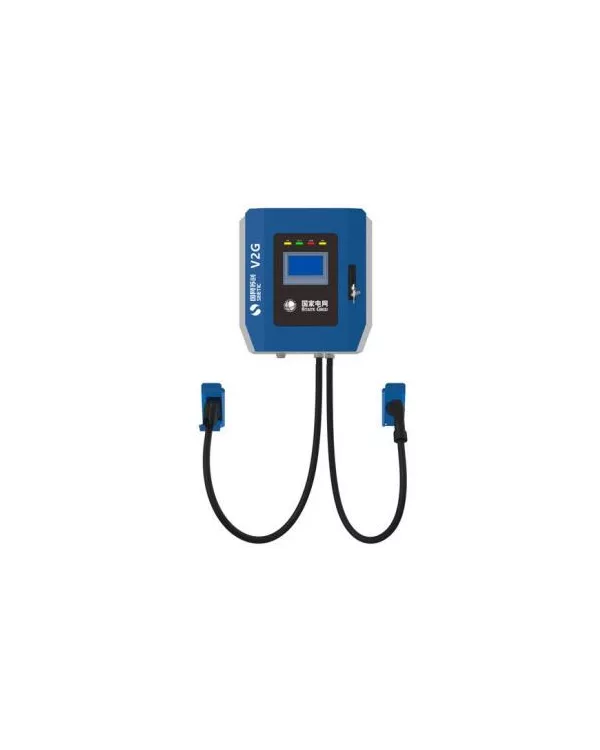
EV Charging Pile / Customized EV Charging Pile / High-Current EV Charging Pile
All-in-one DC Charging Pile / Hot-Swap All-in-one DC Charging Pile / Low-Ripple All-in-one DC Charging Pile
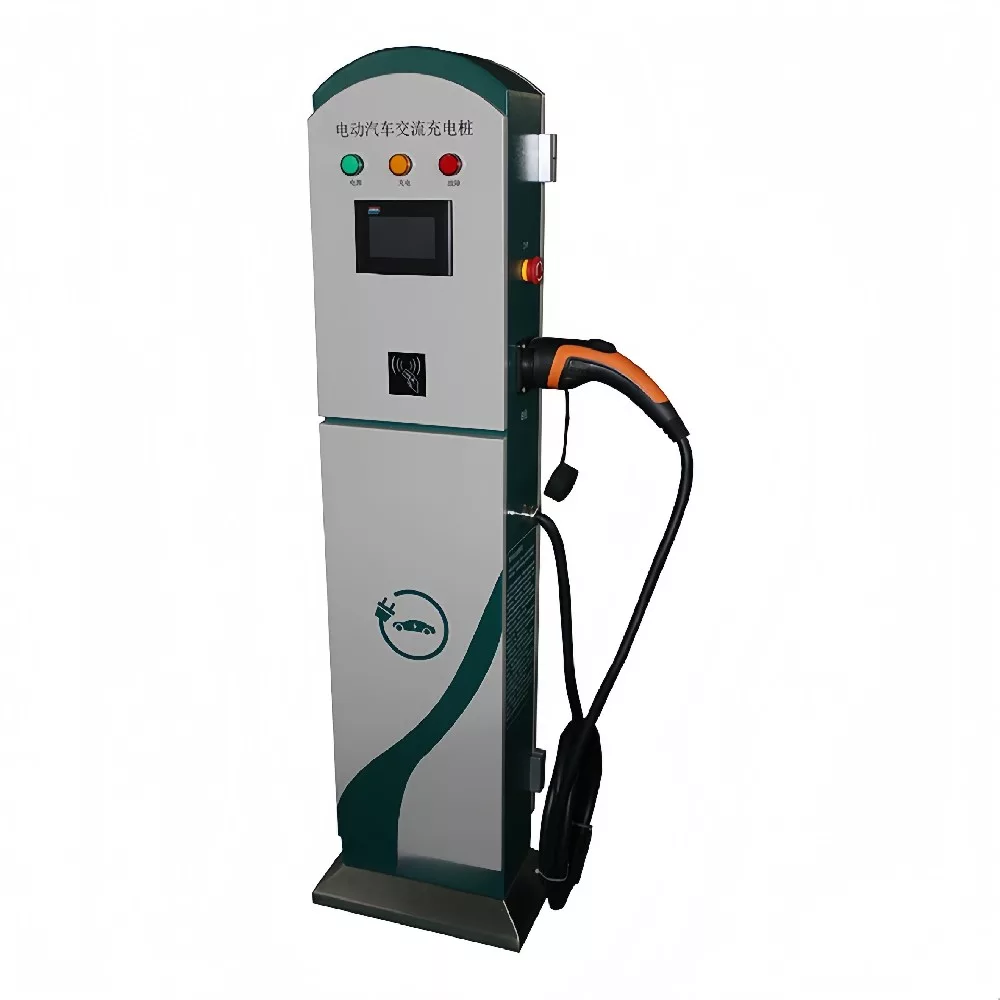
EV Charging Pile / Anti-Corrosion EV Charging Pile / Digital EV Charging Pile
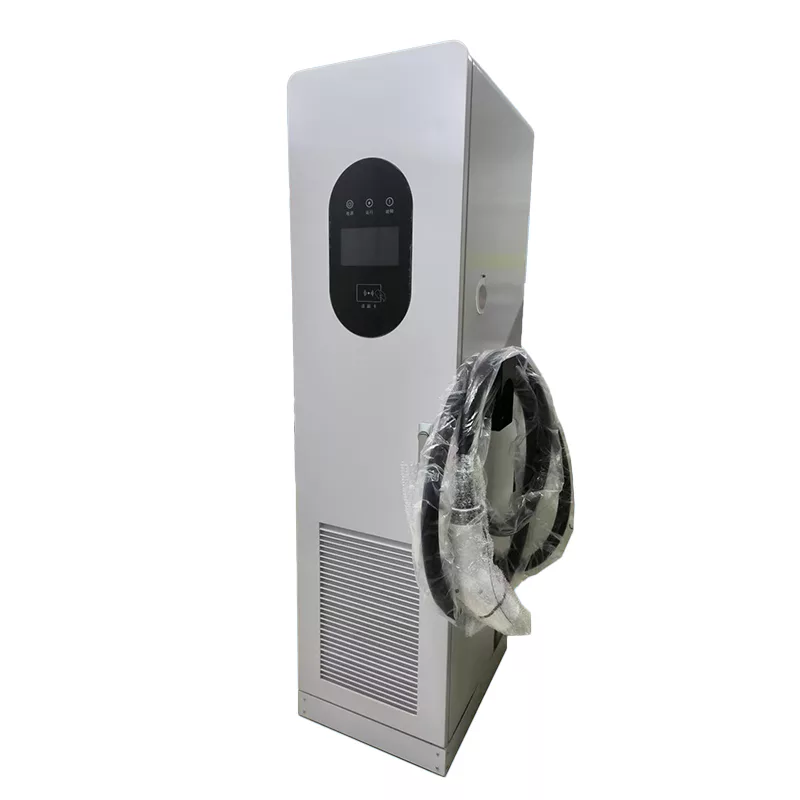
Low-voltage DC Charging Pile / Modular Low-voltage DC Charging Pile / High-Frequency Low-voltage DC Charging Pile
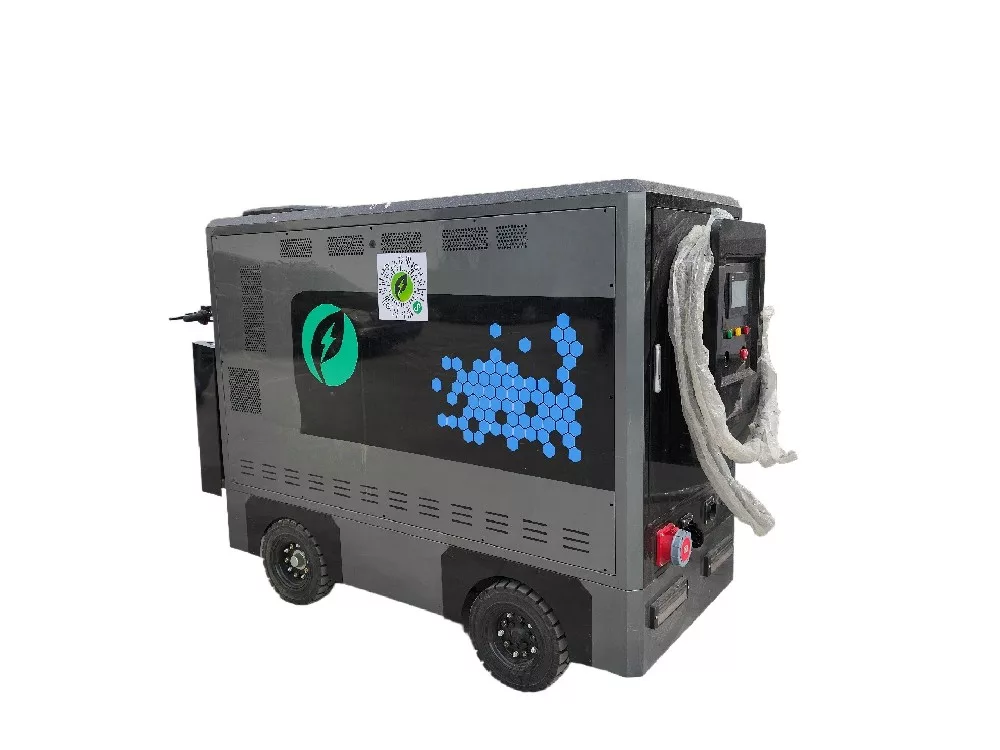
EV Charging Pile / Customized EV Charging Pile / Wide-Temperature EV Charging Pile
AC-DC Integrated Charging Pile / Single-Phase AC-DC Integrated Charging Pile / Wall-Mounted AC-DC Integrated Charging Pile
EV Charging Pile / Compact EV Charging Pile / Wide-Temperature EV Charging Pile