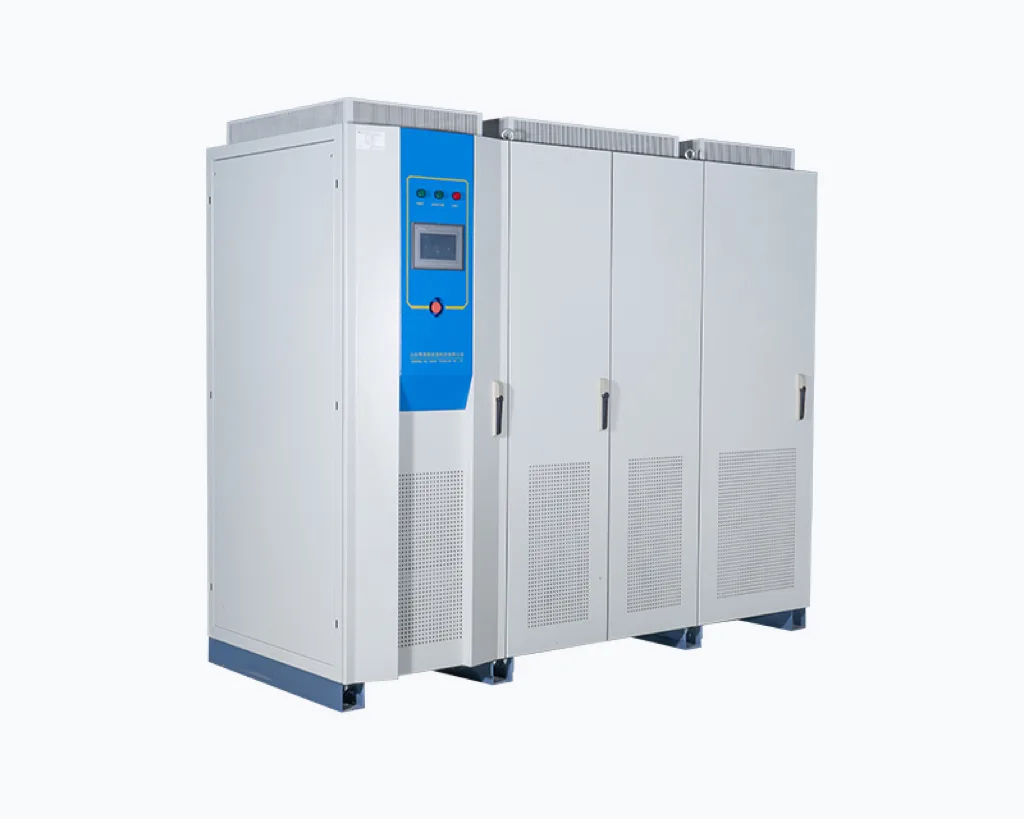
AC Power Supply / Rack-Mount AC Power Supply / High-Precision AC Power Supply from Jinan Nenghua Electromechanical Equipment Co., Ltd., designed for AC Power Supply and its series applications, with engineering customisation to load profile, process requirements and site conditions.
Product Introduction
This series covers dedicated supplies developed for specific industrial processes, including laser pumping, plasma generation, electrostatic precipitation, medical equipment, welding and surface treatment. Unlike general-purpose DC supplies, the output characteristic must match the physical process: laser diodes demand extremely stable current, plasma demands a steep ignition voltage with a stable sustaining current, and precipitators demand high-voltage DC with spark-tracking control.
The unit comprises input rectification and power-factor correction, high-frequency inversion or high-voltage conversion, a dedicated output network (matching, storage or high-voltage rectification), process control and protection, and cooling. The controller usually embeds process curves and an expert parameter library so the operator only selects the process and workpiece specification.
In AC Power Supply selection and deployment, EMC, grounding practice and cable routing often matter more than single-unit specifications, so filtering and shielding follow industrial site standards.
Modular construction allows power units, control boards and fans to be replaced independently, with common spares reducing lifetime maintenance cost.
Working Principle
Laser pumping supplies are defined by current stability and noise. Laser diode output is approximately linear with injection current, so current ripple directly modulates the optical output; pumping supplies therefore require current stability of 0.1% or better, ripple within 0.5%, and microsecond modulation response for pulsed and gated operation. Constant-current control uses a low-noise reference, low-drift sense resistor and multi-stage filtering, with a linear post-regulator where switching noise must be suppressed further.
Plasma supplies must reconcile ignition and sustain. Ignition needs several kilovolts to break down the gas, while sustaining needs only hundreds of volts at a few amperes. Supplies therefore combine a high-voltage ignition module with a constant-current sustain module, or use a high-frequency inverter with an impedance matching network that cancels the capacitive or inductive component of the plasma load and keeps the inverter near resonance.
Electrostatic precipitator supplies deliver high-voltage DC, typically 60–100 kV, charging dust by corona discharge and collecting it in the electric field. If the field breaks down, a spark occurs; the supply must detect it, collapse the voltage within milliseconds to extinguish the arc, and then ramp back automatically, protecting the equipment while maintaining collection efficiency. Intermittent and pulsed energisation improve efficiency for high-resistivity dust and reduce energy consumption.
Medical and research supplies carry the highest safety and accuracy requirements. High-voltage generators need kV and mA dual loops, very fast response and strict leakage limits; accelerator and electron-beam supplies require long-term stability better than 0.01% with demanding ripple, thermal drift and EMC specifications. Such supplies normally include redundant protection, fault logging and remote diagnostics.
Welding and cutting supplies are defined by their output characteristic. Manual arc welding needs a drooping characteristic to stabilise arc length, MIG/MAG needs a flat characteristic with wire-feed control of metal transfer, and plasma cutting needs a high ignition voltage with constant-current sustain. Modern inverter welders use waveform control to switch between short-circuit and spray transfer and to reduce spatter.
High altitude and extreme environments impose additional requirements. Above 1000 m the dielectric strength and cooling capability of air both fall, so derating of 5%–10% per additional 1000 m and larger clearances are applied. Low-temperature sites need low-temperature electrolytic capacitors and anti-condensation heaters, while humid sites need conformal coating and condensation control. Outdoor models also require sun, rain, dust and theft protection with cabinet temperature held by air conditioning or heat exchangers.
Correct installation and commissioning directly affect service life. After positioning, the cabinet is levelled and secured, incoming and outgoing cables are checked for phase sequence and polarity, and power cable cross-sections are chosen for both ampacity and permissible voltage drop. Before energising, insulation resistance is measured and short circuits ruled out; the first start uses soft start or low-voltage trial operation to verify bus establishment, fan direction and communication, then loading proceeds gradually with temperature rise recorded.
Key Features
- Process-matched design: output network tailored to the load, covering ignition, sustain and regulation.
- Expert parameter library: built-in process curves and material parameters recalled in one step.
- Dedicated protection: arc detection, spark tracking, leakage current limiting, overtemperature and interlocks.
- Industrial reliability: modular power units, redundancy and remote diagnostics for continuous production.
- The efficiency curve stays flat from 50% to 100% load, with an automatic energy-saving mode at light load.
- Industrial or automotive-grade components are used, with capacitors, fans and contactors selected for long life.
Main features:
Technical Parameters
| Model | AC Power Supply / Rack-Mount AC Power Supply / High-Precision AC Power Supply |
|---|---|
| Category | AC Power Supply series |
| Output mode | Constant current / constant voltage / high-voltage pulse (by process) |
| Output power | 0.5 kW–500 kW (model dependent) |
| Current stability | ≤0.1% (laser and research models) |
| Ripple factor | ≤0.5% (precision models) |
| Response time | Microsecond modulation response |
| Related ratings | Customized to application (AC Power Supply series) |
| Cooling | Water-cooled / air-cooled by power class |
| Protection | Overvoltage, overcurrent, short circuit, overtemperature, phase loss, interlock |
| Communication | RS485 Modbus / Ethernet / analogue (optional) |
Parameters above are for reference; final specs subject to the technical agreement / order contract. Non-standard customization is available.
Applications
- Plasma processes: plasma cleaning, etching, spraying and surface activation.
- Environmental precipitation: high-voltage supplies for electrostatic precipitators, spraying and flocking.
- Medical and research: X-ray high-voltage generators, accelerators and electron-beam supplies.
- Welding and cutting: manual arc, MIG/MAG, plasma cutting and spot welding.
- Surface treatment: electropolishing, micro-arc oxidation and electrochemical deburring.
- Laser processing: pumping and drive supplies for marking, welding, cutting, cleaning and additive manufacturing.
Typical applications of AC Power Supply / Rack-Mount AC Power Supply / High-Precision AC Power Supply include:
Selection Guide
Select by the dominant metric: current stability and noise for lasers, ignition success rate and sustain stability for plasma, spark-tracking response and average field strength for precipitators.
Confirm regulation range and response speed: whether fast wide-range adjustment is needed, and whether pulse and waveform programming are required.
Confirm integration: analogue and digital interfaces, communication protocol, rack or cabinet mounting, and interlock logic with the host equipment.
Fault diagnosis and predictive maintenance rely on comprehensive monitoring points. The unit continuously acquires bus voltage, output current, device temperature, coolant flow and fan speed, triggering alarms or derating according to severity and storing fault codes, timestamps and key waveforms in non-volatile memory. Host software exports historical curves and estimates remaining life from accumulated operating hours and thermal cycles, turning corrective maintenance into planned maintenance.
Where budget allows, choose one power class higher: the difference in temperature rise and life under continuous full load far outweighs the purchase price.
Operation & Maintenance
Cooling and maintenance: water-cooled models require stable water quality and flow, with periodic cleaning of the plate heat exchanger and strainers, and draining before freezing weather. Air-cooled models need regular cleaning of inlet filters and heatsinks to prevent derating from blocked airflow. After long shutdown, perform an insulation check and low-voltage trial run before returning to service.
Thermal design determines whether the unit can run at full load continuously. Air-cooled models use zoned airflow with front-to-rear heatsink layout, fin spacing matched to air velocity to reduce pressure drop. Water-cooled models use a cold plate with independent channels, thermal grease or phase-change material to lower contact resistance, and outlet temperature and flow sensors. Overall thermal resistance is calculated for the worst case of maximum ambient, full load and half-blocked filters.
Wide-bandgap devices significantly shift the power-density boundary. SiC MOSFETs have about ten times the breakdown field of silicon, so the drift layer is thinner and on-resistance lower at the same rating. With switching frequencies above 40 kHz, magnetic components shrink by more than half and efficiency improves by one to two percentage points. The trade-off is higher dv/dt and di/dt, which place stricter demands on gate drivers, busbars and filtering.
Design and testing follow the GB/T 3859 semiconductor converter standard, GB 17625 harmonic limits, GB/T 2423 environmental test series and IEC 61000 immunity requirements; export models additionally meet the relevant CE or UL clauses. Factory tests typically cover insulation resistance and withstand voltage, full-load temperature rise, efficiency and power factor, ripple and regulation accuracy, and protection trip values, with per-unit records kept for traceability.
FAQ
- Why can't a dedicated supply simply be replaced by a general-purpose DC supply?
- General-purpose supplies are designed for resistive loads, whereas laser diodes, plasma and arc loads are strongly non-linear with negative-resistance regions that provoke oscillation, arcing and device damage. Dedicated supplies match the output network, protection logic and control algorithms to these characteristics.
- How does spark tracking work in a precipitator supply?
- The supply continuously monitors output voltage and current. When the spark signature of a voltage collapse with a current surge is detected, output is interrupted or reduced within milliseconds to extinguish the arc, then ramped back at a configured slope. Arc-quenching time, recovery slope and repeat count are adjustable to match the dust.
- Why is low noise more important than wide bandwidth for laser pumping supplies?
- Laser output power follows the injection current, so current noise translates into optical intensity noise, degrading process quality and measurement accuracy. Bandwidth only needs to cover the actual modulation requirement; excessive bandwidth introduces more switching noise, so low-noise design matters more.
- What are the installation requirements for AC Power Supply / Rack-Mount AC Power Supply / High-Precision AC Power Supply?
- Install in a well-ventilated area free of conductive dust and corrosive gas, with ambient temperature from -10 to 40 °C (up to 50 °C for water-cooled models) and at least 800 mm maintenance clearance front and rear. Water-cooled models require circulating water at the specified pressure and flow with inlet temperature not above 32 °C. Ground resistance should be below 4 ohm and power and signal cables should be routed in separate trays.
- What is the lead time and customisation scope for AC Power Supply / Rack-Mount AC Power Supply / High-Precision AC Power Supply?
- Standard ratings are delivered within the agreed period after contract effectiveness. Output voltage, current, communication protocol, cabinet dimensions and protection class can all be customised; custom models require load characteristics, operating environment and interface requirements for the electrical and mechanical design.
Related Products

Programmable AC Power Supply / Liquid-Cooled Programmable AC Power Supply / Fast-Response Programmable AC Power Supply

AC Power Supply / Fast-Response AC Power Supply / Liquid-Cooled AC Power Supply
AC Power Supply / High-Precision AC Power Supply / Intelligent AC Power Supply

AC Regenerative Feedback Electronic Load / Intelligent AC Regenerative Feedback Electronic Load / Outdoor AC Regenerative Feedback Electronic Load

Programmable AC Power Supply / Hot-Swap Programmable AC Power Supply / Explosion-Proof Programmable AC Power Supply
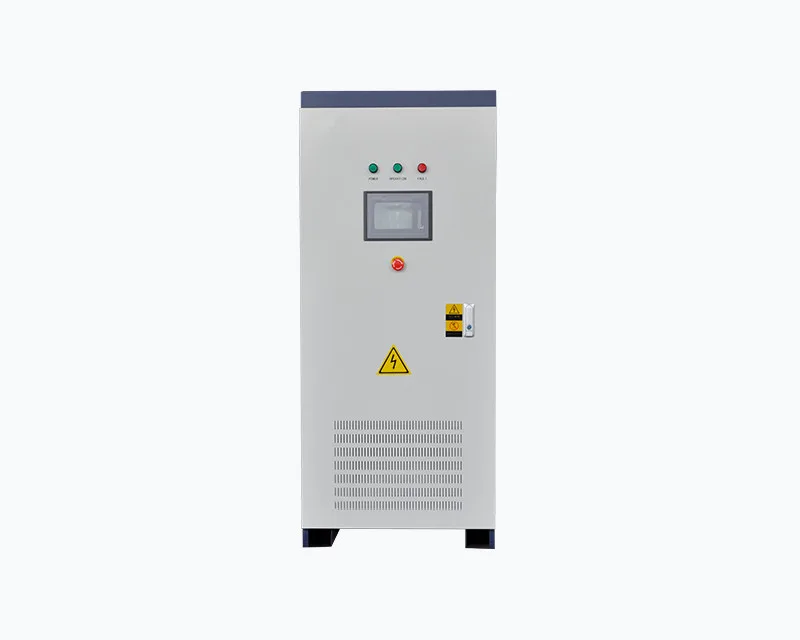
AC Power Supply / Cabinet-Type AC Power Supply / Outdoor AC Power Supply

AC Power Supply / Program-Controlled AC Power Supply / Isolated AC Power Supply