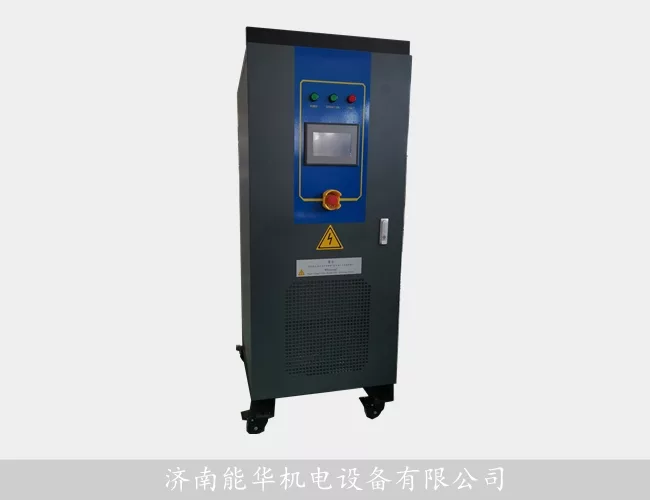
Frequency-Stabilized Voltage-stabilized Power Supply / Programmable Frequency-Stabilized Voltage-stabilized Power Supply / Low-Ripple Frequency-Stabilized Voltage-stabilized Power Supply from Jinan Nenghua Electromechanical Equipment Co., Ltd., designed for Frequency-Stabilized Voltage-stabilized Power Supply and its series applications, with engineering customisation to load profile, process requirements and site conditions.
Product Introduction
This series covers dedicated supplies developed for specific industrial processes, including laser pumping, plasma generation, electrostatic precipitation, medical equipment, welding and surface treatment. Unlike general-purpose DC supplies, the output characteristic must match the physical process: laser diodes demand extremely stable current, plasma demands a steep ignition voltage with a stable sustaining current, and precipitators demand high-voltage DC with spark-tracking control.
The unit comprises input rectification and power-factor correction, high-frequency inversion or high-voltage conversion, a dedicated output network (matching, storage or high-voltage rectification), process control and protection, and cooling. The controller usually embeds process curves and an expert parameter library so the operator only selects the process and workpiece specification.
For the surge loads and frequent start-stop duty typical of Frequency-Stabilized Voltage-stabilized Power Supply, soft start, current limiting and overload recovery are specifically tuned to avoid nuisance tripping.
Every unit is full-load burned in and waveform tested before dispatch, with a test report and wiring diagram supplied for acceptance and maintenance.
Working Principle
Laser pumping supplies are defined by current stability and noise. Laser diode output is approximately linear with injection current, so current ripple directly modulates the optical output; pumping supplies therefore require current stability of 0.1% or better, ripple within 0.5%, and microsecond modulation response for pulsed and gated operation. Constant-current control uses a low-noise reference, low-drift sense resistor and multi-stage filtering, with a linear post-regulator where switching noise must be suppressed further.
Plasma supplies must reconcile ignition and sustain. Ignition needs several kilovolts to break down the gas, while sustaining needs only hundreds of volts at a few amperes. Supplies therefore combine a high-voltage ignition module with a constant-current sustain module, or use a high-frequency inverter with an impedance matching network that cancels the capacitive or inductive component of the plasma load and keeps the inverter near resonance.
Electrostatic precipitator supplies deliver high-voltage DC, typically 60–100 kV, charging dust by corona discharge and collecting it in the electric field. If the field breaks down, a spark occurs; the supply must detect it, collapse the voltage within milliseconds to extinguish the arc, and then ramp back automatically, protecting the equipment while maintaining collection efficiency. Intermittent and pulsed energisation improve efficiency for high-resistivity dust and reduce energy consumption.
Medical and research supplies carry the highest safety and accuracy requirements. High-voltage generators need kV and mA dual loops, very fast response and strict leakage limits; accelerator and electron-beam supplies require long-term stability better than 0.01% with demanding ripple, thermal drift and EMC specifications. Such supplies normally include redundant protection, fault logging and remote diagnostics.
Welding and cutting supplies are defined by their output characteristic. Manual arc welding needs a drooping characteristic to stabilise arc length, MIG/MAG needs a flat characteristic with wire-feed control of metal transfer, and plasma cutting needs a high ignition voltage with constant-current sustain. Modern inverter welders use waveform control to switch between short-circuit and spray transfer and to reduce spatter.
Paralleling and redundancy are common means of improving availability. Modules share current by master-slave or droop control with errors within 3%. In an N+1 arrangement a failed module is automatically replaced by the remaining units and can be withdrawn for replacement online. Paralleled systems need a common voltage reference and slew rate to avoid circulating current, and DC-side sharing reactors or separate output cables further suppress imbalance.
High altitude and extreme environments impose additional requirements. Above 1000 m the dielectric strength and cooling capability of air both fall, so derating of 5%–10% per additional 1000 m and larger clearances are applied. Low-temperature sites need low-temperature electrolytic capacitors and anti-condensation heaters, while humid sites need conformal coating and condensation control. Outdoor models also require sun, rain, dust and theft protection with cabinet temperature held by air conditioning or heat exchangers.
Key Features
- Fast response: microsecond modulation for pulsed, gated and waveform-programmed operation.
- Expert parameter library: built-in process curves and material parameters recalled in one step.
- Dedicated protection: arc detection, spark tracking, leakage current limiting, overtemperature and interlocks.
- Industrial reliability: modular power units, redundancy and remote diagnostics for continuous production.
- Cabinet temperature, humidity and dust status are monitored, giving early warning instead of an abrupt trip.
- Multiple process recipes can be stored and recalled, avoiding repeated adjustment during product changeover.
Main features:
Technical Parameters
| Model | Frequency-Stabilized Voltage-stabilized Power Supply / Programmable Frequency-Stabilized Voltage-stabilized Power Supply / Low-Ripple Frequency-Stabilized Voltage-stabilized Power Supply |
|---|---|
| Category | Frequency-Stabilized Voltage-stabilized Power Supply series |
| Output mode | Constant current / constant voltage / high-voltage pulse (by process) |
| Output power | 0.5 kW–500 kW (model dependent) |
| Current stability | ≤0.1% (laser and research models) |
| Ripple factor | ≤0.5% (precision models) |
| Response time | Microsecond modulation response |
| Related ratings | Customized to application (Frequency-Stabilized Voltage-stabilized Power Supply series) |
| Cooling | Water-cooled / air-cooled by power class |
| Protection | Overvoltage, overcurrent, short circuit, overtemperature, phase loss, interlock |
| Communication | RS485 Modbus / Ethernet / analogue (optional) |
Parameters above are for reference; final specs subject to the technical agreement / order contract. Non-standard customization is available.
Applications
- Welding and cutting: manual arc, MIG/MAG, plasma cutting and spot welding.
- Surface treatment: electropolishing, micro-arc oxidation and electrochemical deburring.
- Laser processing: pumping and drive supplies for marking, welding, cutting, cleaning and additive manufacturing.
- Plasma processes: plasma cleaning, etching, spraying and surface activation.
- Environmental precipitation: high-voltage supplies for electrostatic precipitators, spraying and flocking.
- Medical and research: X-ray high-voltage generators, accelerators and electron-beam supplies.
Typical applications of Frequency-Stabilized Voltage-stabilized Power Supply / Programmable Frequency-Stabilized Voltage-stabilized Power Supply / Low-Ripple Frequency-Stabilized Voltage-stabilized Power Supply include:
Selection Guide
Select by the dominant metric: current stability and noise for lasers, ignition success rate and sustain stability for plasma, spark-tracking response and average field strength for precipitators.
Confirm safety and compliance: medical models must meet the relevant safety and EMC standards, and high-voltage models require insulation and discharge distance verification.
Confirm integration: analogue and digital interfaces, communication protocol, rack or cabinet mounting, and interlock logic with the host equipment.
Fault diagnosis and predictive maintenance rely on comprehensive monitoring points. The unit continuously acquires bus voltage, output current, device temperature, coolant flow and fan speed, triggering alarms or derating according to severity and storing fault codes, timestamps and key waveforms in non-volatile memory. Host software exports historical curves and estimates remaining life from accumulated operating hours and thermal cycles, turning corrective maintenance into planned maintenance.
If the local grid fluctuates or large equipment starts frequently, verify the input undervoltage and overvoltage protection range and the auto-recovery strategy.
Operation & Maintenance
Cooling and maintenance: water-cooled models require stable water quality and flow, with periodic cleaning of the plate heat exchanger and strainers, and draining before freezing weather. Air-cooled models need regular cleaning of inlet filters and heatsinks to prevent derating from blocked airflow. After long shutdown, perform an insulation check and low-voltage trial run before returning to service.
Device derating and lifetime are key constraints of this series. Electrolytic capacitor life roughly halves for every 10 °C rise, so selection checks both ripple current and case temperature, and capacitors are placed away from heat sources and airflow dead zones. IGBT and SiC modules are derated to a junction temperature below 125 °C (150 °C for SiC), with short-circuit withstand time and thermal cycling capability verified to keep margin under frequent start-stop and load swings.
The digital control platform uses a DSP for the main control loop and an FPGA for high-speed timing and multi-channel sampling, exchanging data over a parallel bus. Current and voltage are sensed with isolated amplifiers or Hall sensors, whose sampling rate and resolution set the upper limit of loop bandwidth. Voltage and current loop crossover frequencies are set to one third to one fifth of the load time constant, balancing response and stability. Parameters can be read, written and backed up from the host computer for batch replication.
Design and testing follow the GB/T 3859 semiconductor converter standard, GB 17625 harmonic limits, GB/T 2423 environmental test series and IEC 61000 immunity requirements; export models additionally meet the relevant CE or UL clauses. Factory tests typically cover insulation resistance and withstand voltage, full-load temperature rise, efficiency and power factor, ripple and regulation accuracy, and protection trip values, with per-unit records kept for traceability.
FAQ
- Why can't a dedicated supply simply be replaced by a general-purpose DC supply?
- General-purpose supplies are designed for resistive loads, whereas laser diodes, plasma and arc loads are strongly non-linear with negative-resistance regions that provoke oscillation, arcing and device damage. Dedicated supplies match the output network, protection logic and control algorithms to these characteristics.
- How does spark tracking work in a precipitator supply?
- The supply continuously monitors output voltage and current. When the spark signature of a voltage collapse with a current surge is detected, output is interrupted or reduced within milliseconds to extinguish the arc, then ramped back at a configured slope. Arc-quenching time, recovery slope and repeat count are adjustable to match the dust.
- Why is low noise more important than wide bandwidth for laser pumping supplies?
- Laser output power follows the injection current, so current noise translates into optical intensity noise, degrading process quality and measurement accuracy. Bandwidth only needs to cover the actual modulation requirement; excessive bandwidth introduces more switching noise, so low-noise design matters more.
- What are the installation requirements for Frequency-Stabilized Voltage-stabilized Power Supply / Programmable Frequency-Stabilized Voltage-stabilized Power Supply / Low-Ripple Frequency-Stabilized Voltage-stabilized Power Supply?
- Install in a well-ventilated area free of conductive dust and corrosive gas, with ambient temperature from -10 to 40 °C (up to 50 °C for water-cooled models) and at least 800 mm maintenance clearance front and rear. Water-cooled models require circulating water at the specified pressure and flow with inlet temperature not above 32 °C. Ground resistance should be below 4 ohm and power and signal cables should be routed in separate trays.
- What is the lead time and customisation scope for Frequency-Stabilized Voltage-stabilized Power Supply / Programmable Frequency-Stabilized Voltage-stabilized Power Supply / Low-Ripple Frequency-Stabilized Voltage-stabilized Power Supply?
- Standard ratings are delivered within the agreed period after contract effectiveness. Output voltage, current, communication protocol, cabinet dimensions and protection class can all be customised; custom models require load characteristics, operating environment and interface requirements for the electrical and mechanical design.
Related Products

AC Variable-Frequency Power Supply / Fast-Response AC Variable-Frequency Power Supply / Hot-Swap AC Variable-Frequency Power Supply
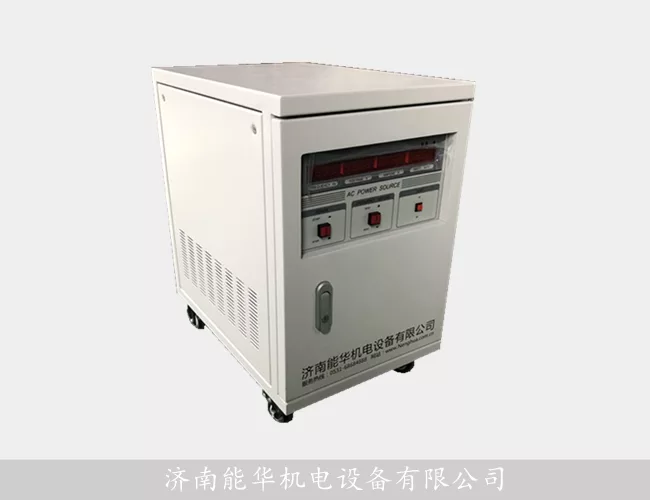
Programmable Power-frequency Inverter Power Supply / Isolated Programmable Power-frequency Inverter Power Supply / Redundant Programmable Power-frequency Inverter Power Supply
Three-Phase Variable-Frequency Power Supply / Cabinet-Type Three-Phase Variable-Frequency Power Supply / Medium-Power Three-Phase Variable-Frequency Power Supply

Variable Frequency Power Supply / Motor-Test Variable-Frequency Power Supply / Intelligent Variable-Frequency Power Supply
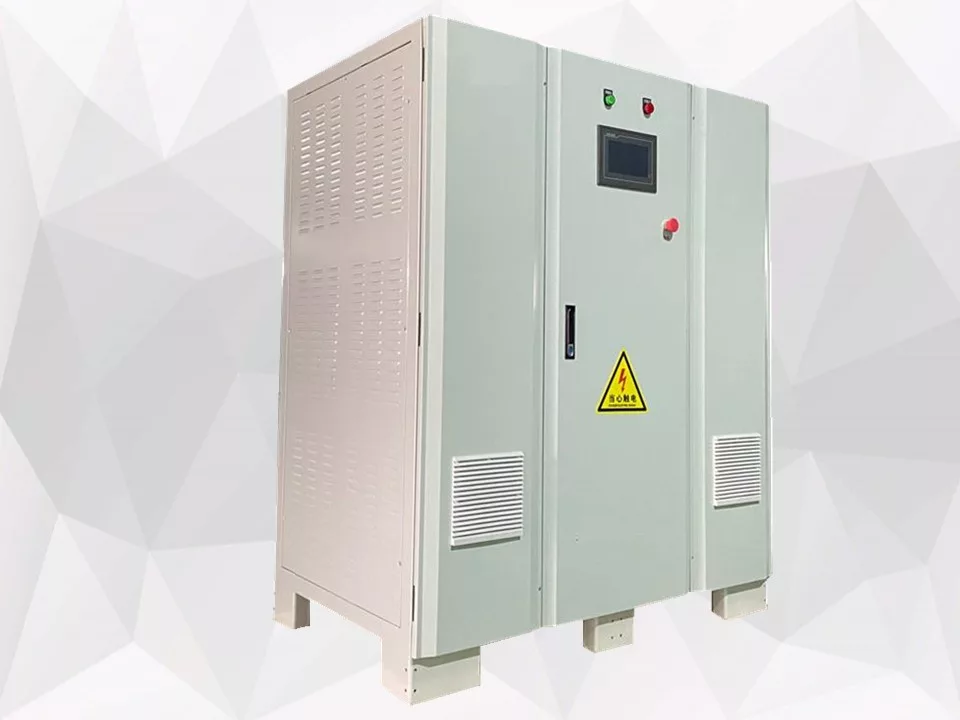
Variable Frequency Power Supply / Marine Variable-Frequency Power Supply / Military-Grade Variable-Frequency Power Supply

Variable Frequency Power Supply / Military-Grade Variable-Frequency Power Supply / Low-Harmonic Variable-Frequency Power Supply
Frequency-Stabilized Voltage-stabilized Power Supply / Low-Power Frequency-Stabilized Voltage-stabilized Power Supply / Explosion-Proof Frequency-Stabilized Voltage-stabilized Power Supply
